Home › Scar Camouflage & Dark Scar Correction

Paramedical Tattooing · Bakersfield, California

Scar camouflage and dark scar correction

Camouflage and revision for surgical scars, traumatic scars, and post-inflammatory hyperpigmentation — with dedicated protocols for dark and raised scars on melanin-rich skin, where standard camouflage technique most often falls short.

Scars commonly treated

  • Tummy tuck and abdominoplasty scars
  • C-section scars
  • Breast augmentation, lift, and reduction scars, including inframammary
  • Facelift scars at the temporal hairline and around the ear
  • Traumatic and accident scars
  • Post-inflammatory hyperpigmentation
  • Raised, darkened, and hypertrophic scarring
  • Skin graft and donor site scars

Who this is for

  • The scar is fully healed and physician-cleared — minimum three months post-procedure, and often longer for surgical scars
  • The scar is no longer changing in color or texture on its own
  • You understand the goal is to reduce visible contrast, not erase the scar entirely
  • All skin tones — deeper skin is a specialty, not an exception

How It Works

About this treatment

There are two distinct approaches, and the right one depends on the scar. Camouflage places flesh-toned pigment into the scar to blend it toward surrounding skin. Inkless revision uses no pigment at all — it works on the scar's own texture and tone through controlled collagen induction. Some cases call for one, some for both in sequence.

Dark scars are where most camouflage work goes wrong. Depositing pigment into hyperpigmented or raised tissue can darken it further, and technique developed on lighter skin does not transfer. Rebecca works with protocols built specifically for Fitzpatrick IV–VI and trains other artists in them.

Honest expectations matter here more than anywhere else. Some scars respond dramatically, some improve moderately, and some are not good candidates at all. Your consultation tells you which yours is before you spend anything.
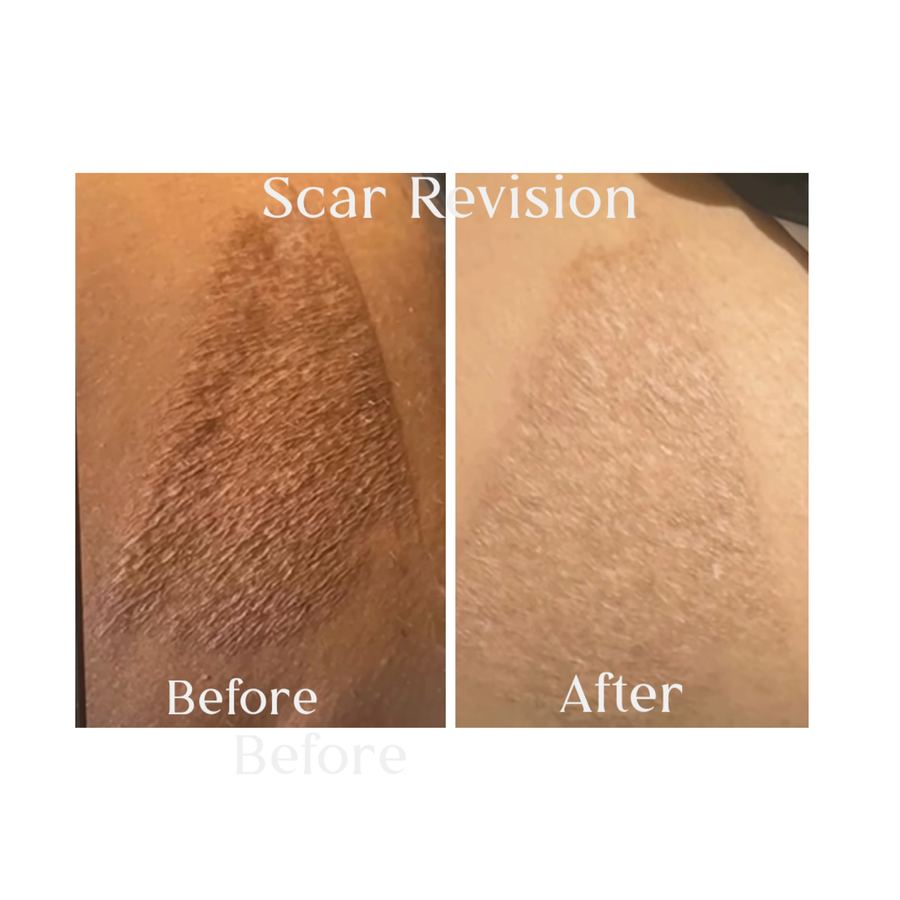
Dark scar revision before and after on deep skin tone
Dark Scar Revision — Fitzpatrick IV–VI
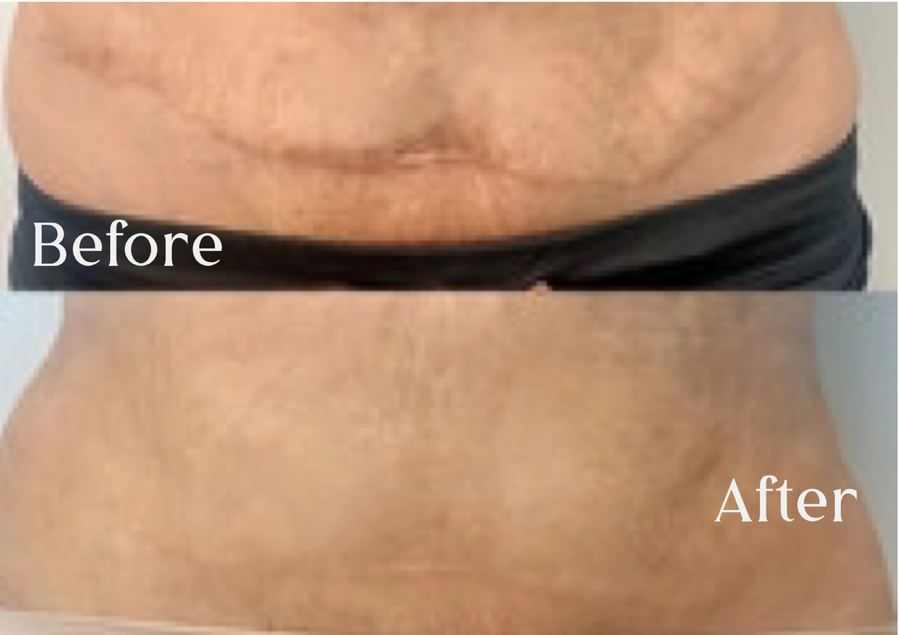
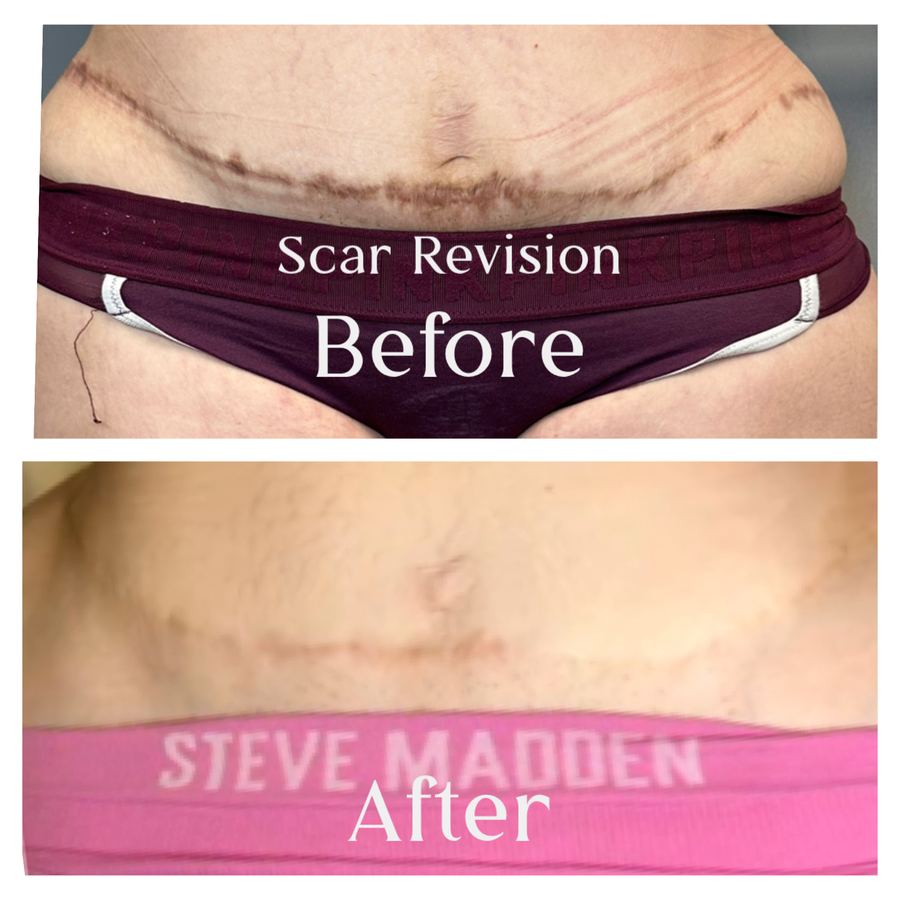
Scar revision before and after on a tummy tuck scar
Tummy Tuck Scar Revision
C-section scar revision before and after
C-Section Scar Revision
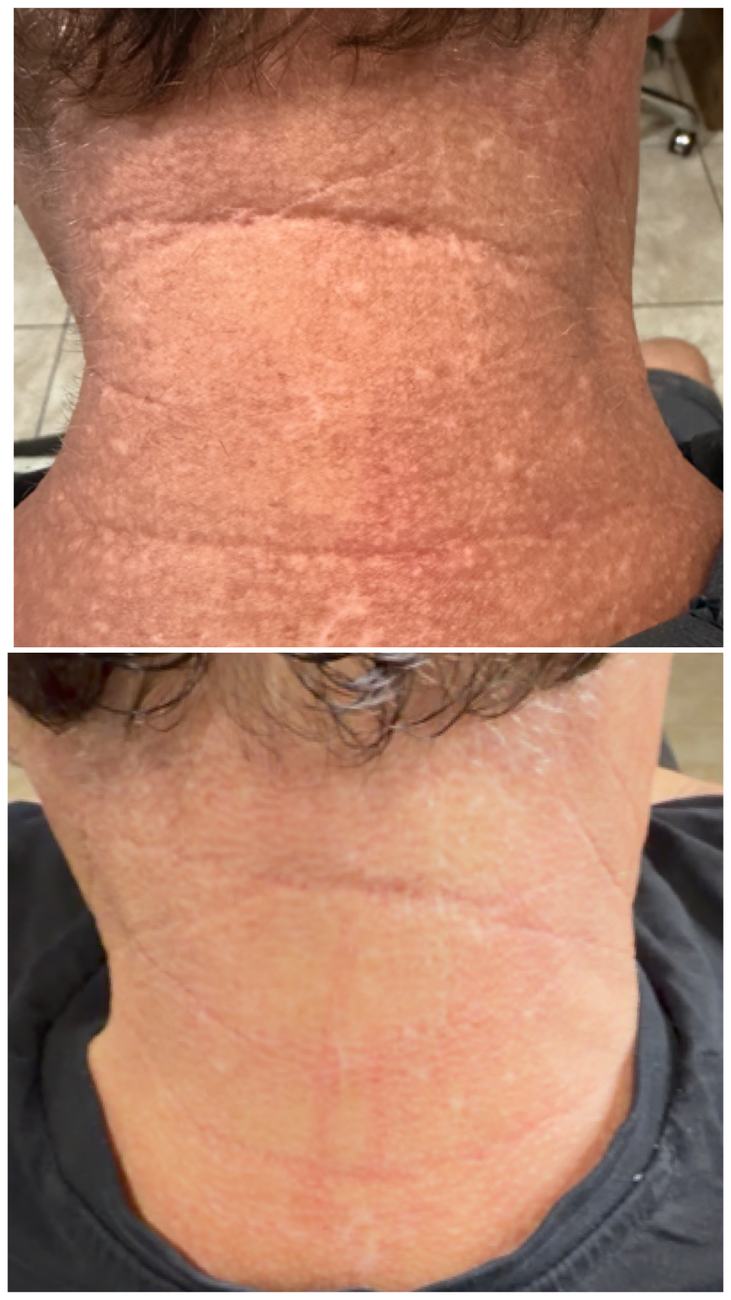
Extensive raised and hypopigmented scarring on the neck, before and after camouflage and revision
Neck — Extensive Scarring
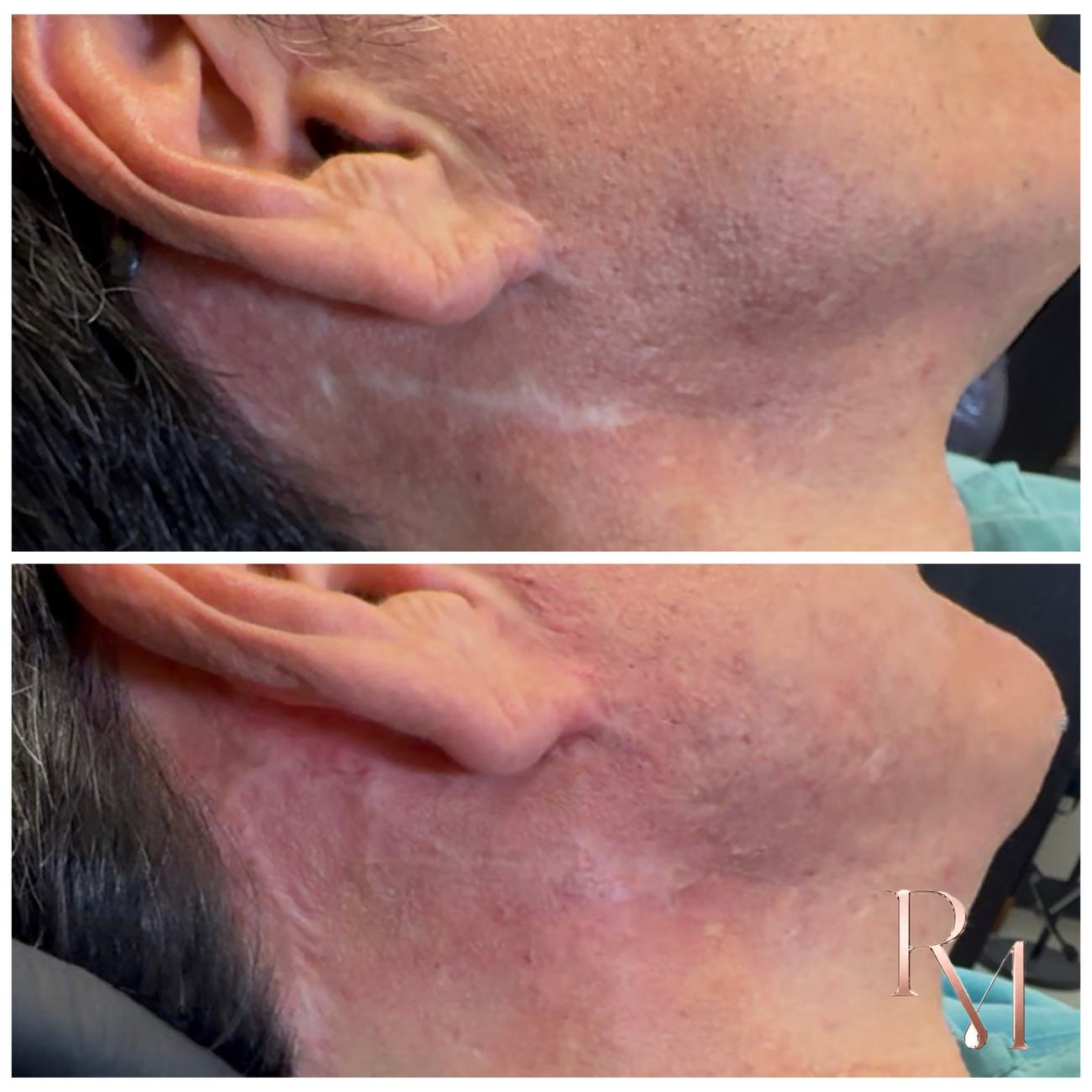
Jawline and neck surgical scar, before and after revision
Jawline & Neck
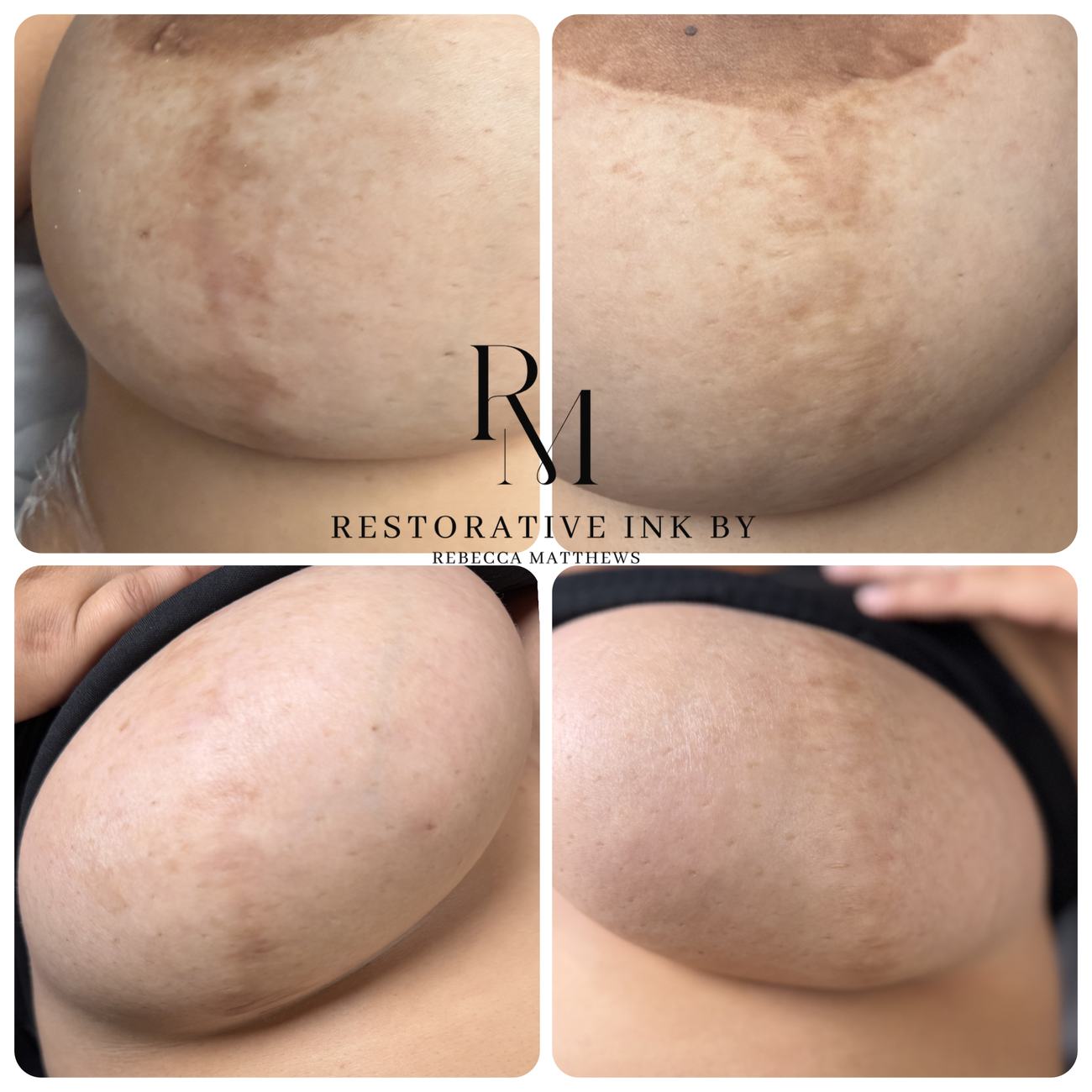
Breast scarring and pigmentation revision, shown from four angles
Breast Scarring & Pigmentation
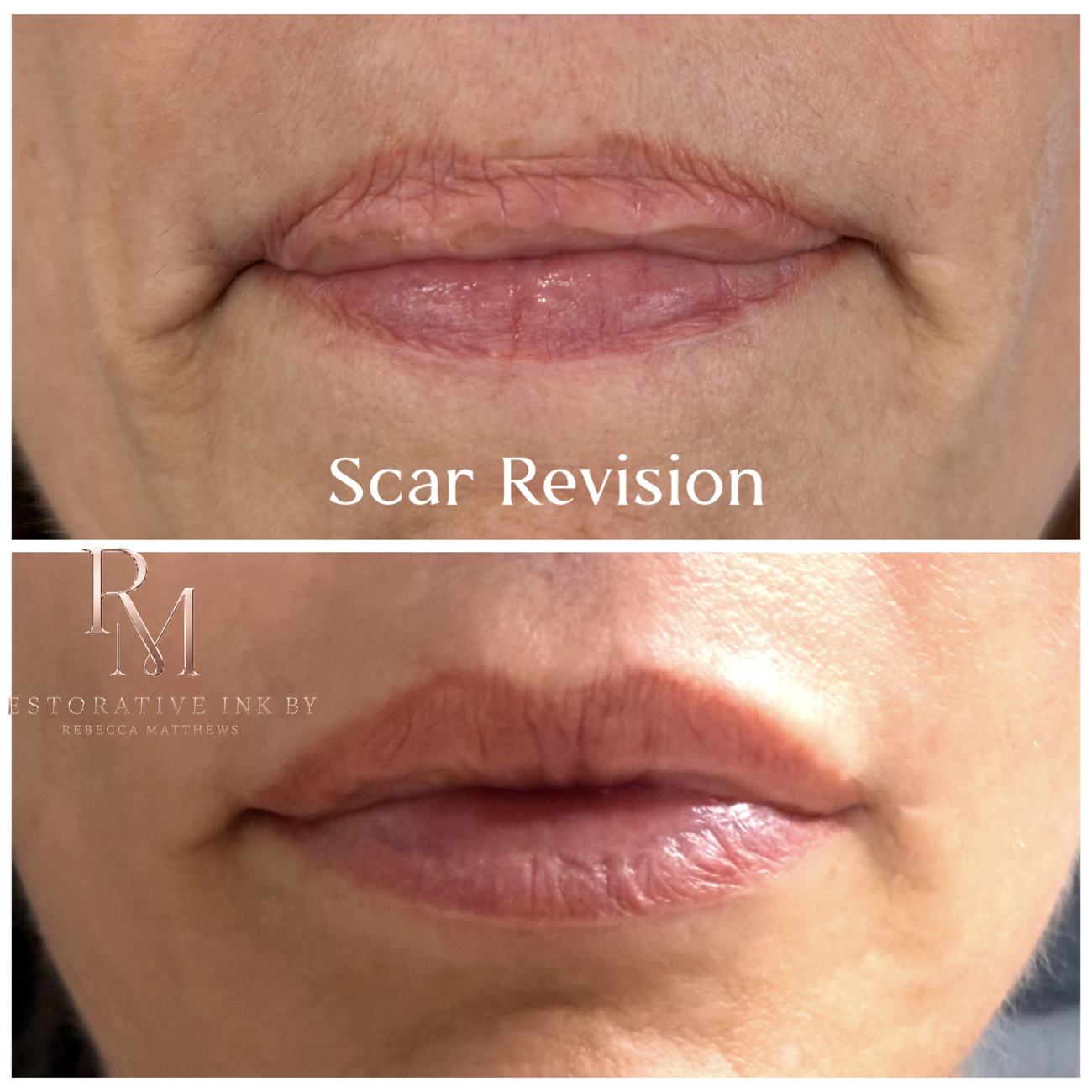
Lip and perioral scar revision, before and after
Lip & Perioral
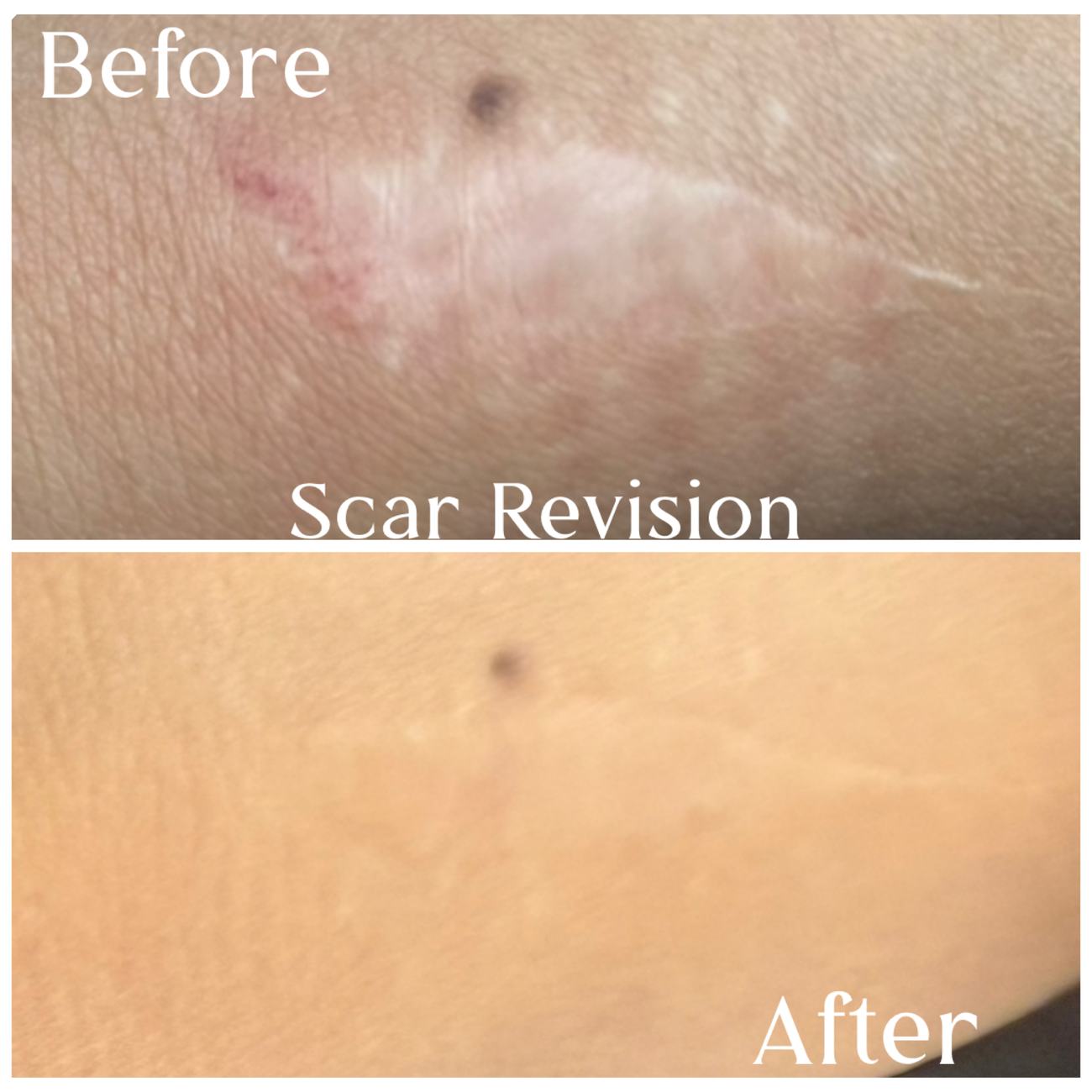
Raised hypopigmented scar on the arm, before and after revision
Arm — Raised Scar

Unretouched results, shared with patient consent. Outcomes vary by scar type, age, and skin tone.

Before Anything Is Scheduled

Your virtual consultation is free

Every case is different. Scar age, size, texture, skin tone, and any prior treatment all change what a plan looks like — which is why pricing is never quoted sight unseen. Your virtual consultation costs nothing, and you leave it knowing whether you're a candidate, what the plan involves, and exactly what it costs before you commit to anything.

Book Your Free Virtual Consultation

Common Questions

Scar Camouflage & Dark Scar Correction

What is the difference between camouflage and inkless revision?

Camouflage adds flesh-toned pigment to blend the scar toward surrounding skin. Inkless revision uses no pigment — it works on the scar's own texture and tone. Which one suits your scar is determined at consultation.

Can you treat dark scars on Black or brown skin?

Yes. This is a specialty. Melanin-rich skin requires different protocols because standard camouflage technique can worsen hyperpigmentation, which is why many artists decline this work or produce poor results.

How old does a scar need to be?

Fully healed and physician-cleared, minimum three months post-procedure, and frequently longer. A scar still changing color or texture on its own is not ready.

Will the scar disappear completely?

No, and anyone promising that is overselling. The goal is to substantially reduce how visible it is. How far that goes depends on the scar's age, depth, texture, and your skin.

Related Services

View all services →