Home › 3D Areola Restoration

Paramedical Tattooing · Bakersfield, California

3D areola restoration in Bakersfield

Hyper-realistic areola and nipple restoration following mastectomy, breast reconstruction, augmentation, or reduction. Dimensional shading recreates natural color, projection, and symmetry — for many patients, the final step in a long reconstruction.

What this addresses

  • Bilateral restoration following double mastectomy
  • Unilateral restoration matched to the remaining natural areola
  • Loss of areola color or definition after reconstruction
  • Periareolar scarring after augmentation, lift, or reduction
  • Areolas that healed asymmetrically after surgery
  • Faded or discolored results from previous areola tattooing

Who this is for

  • Skin is fully healed and cleared by your surgeon — generally a minimum of three months after your last procedure
  • You are finished with reconstruction, or your surgeon has confirmed no further revisions are planned
  • You are not currently in active radiation treatment to the area
  • All skin tones, including Fitzpatrick IV–VI, where pigment matching is most demanding

How It Works

About this treatment

3D areola restoration is a tattooing technique, not surgery. Pigment is placed in fully healed skin and shaded to create the appearance of depth and projection — which is what makes a flat reconstruction read as dimensional. Color is mixed to your skin, not selected from a chart, and that matching is where most of the skill lives.

Rebecca is a master certified paramedical artist and master trainer who took second place at the international Skin Games, and works extensively on deeper skin tones where undertone matching is unforgiving. Patients travel to Bakersfield from across Kern County and Central California for this work.

Breast cancer survivors can receive 3D areola restoration at no cost through Renewed Skin Foundation, Rebecca's California 501(c)(3) nonprofit.
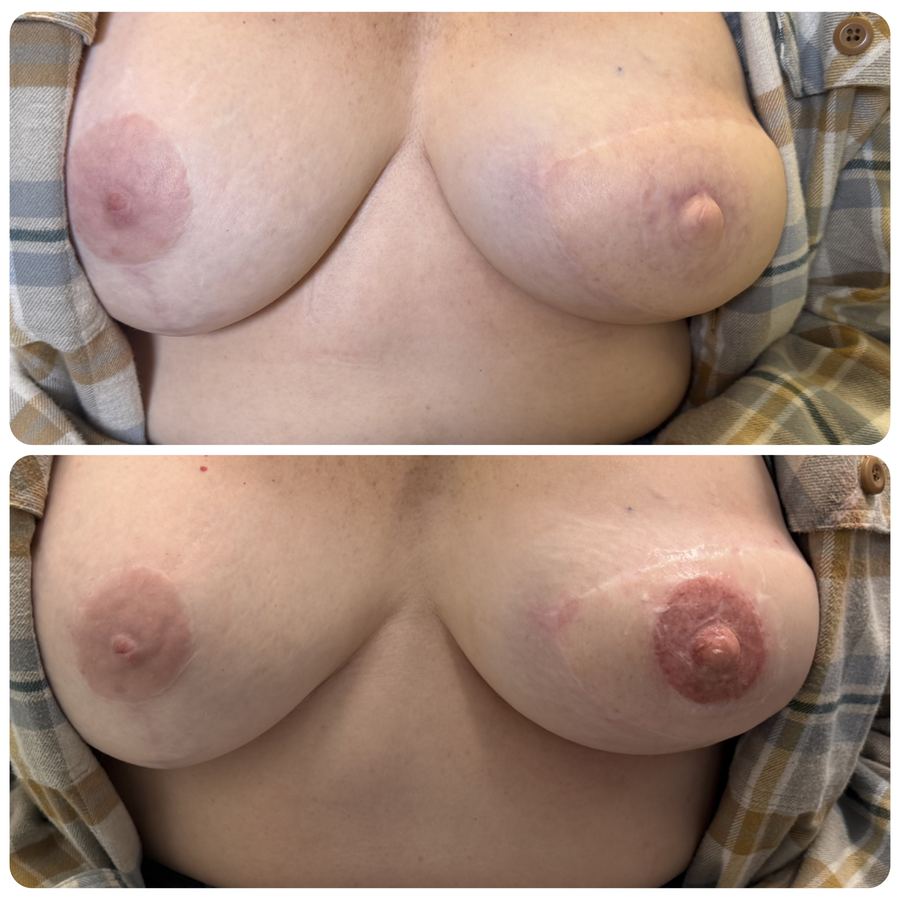
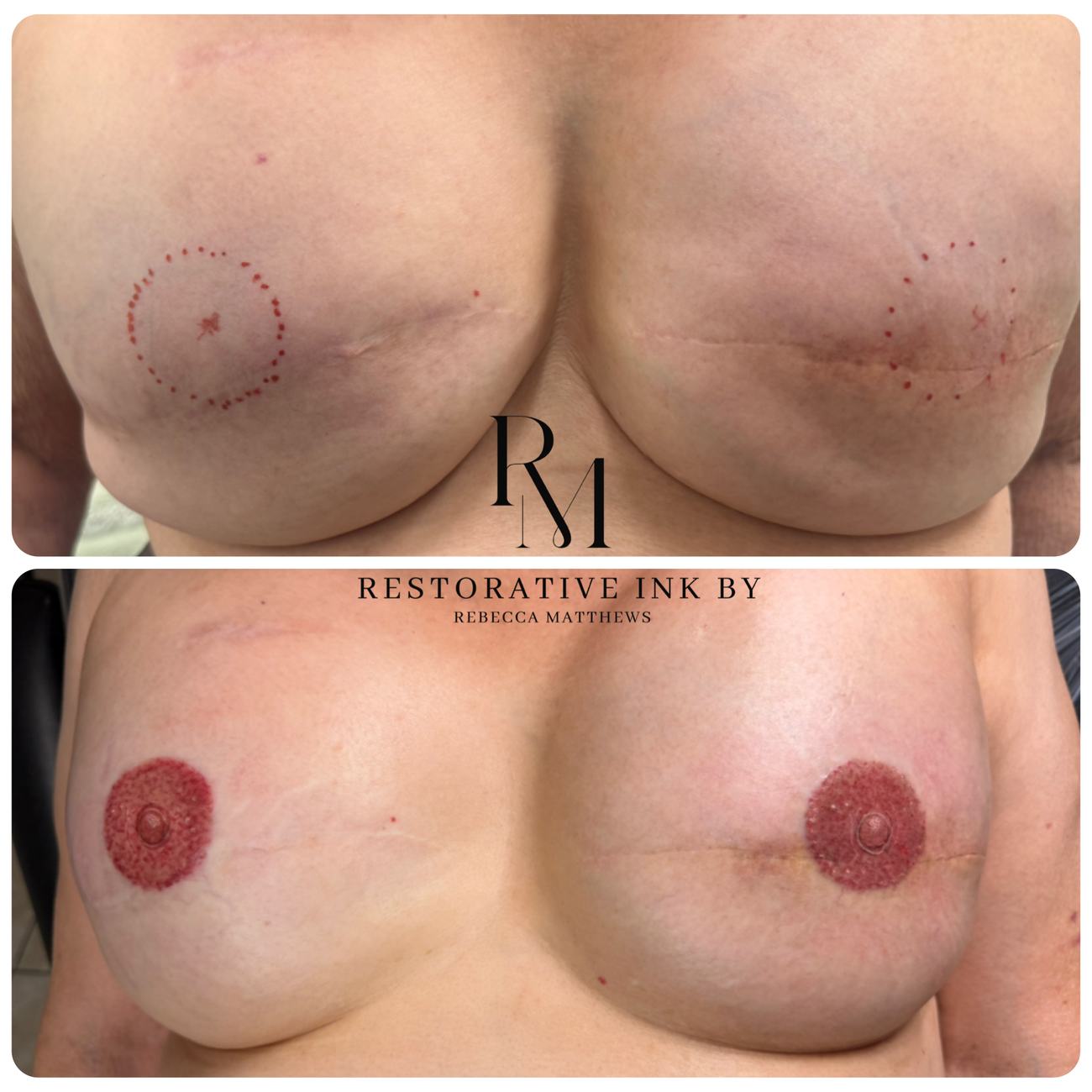
Bilateral 3D areola restoration after mastectomy, mapping to healed result
Bilateral Restoration — Mapping to Result
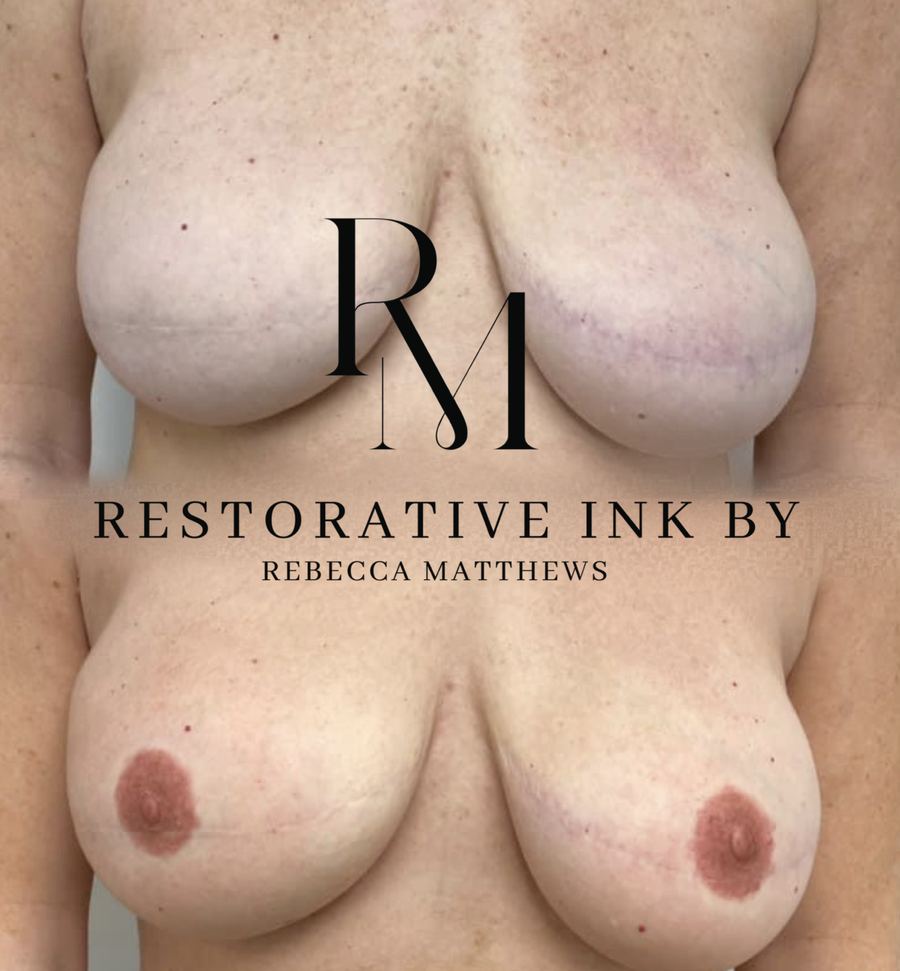
Unilateral 3D areola restoration before and after
Unilateral Restoration
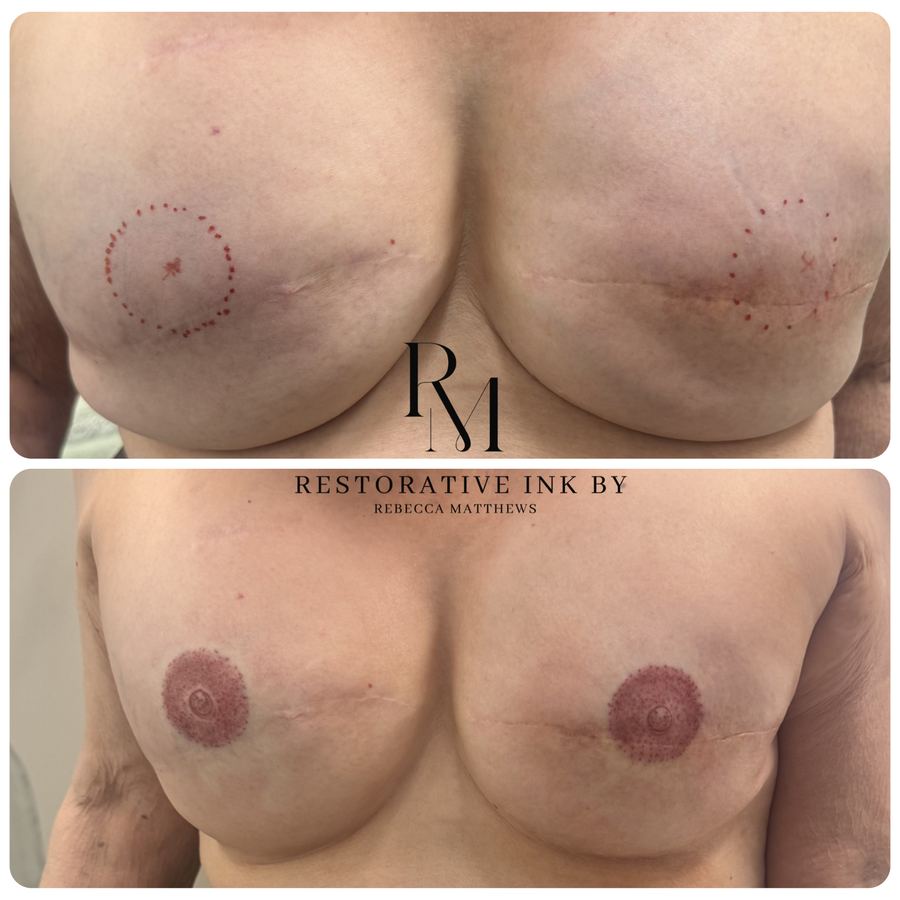
Bilateral 3D areola restoration before and after
Bilateral Restoration
Bilateral 3D areola restoration after mastectomy, showing the mapping stencil and the completed work
Bilateral Restoration — Mapping to Result
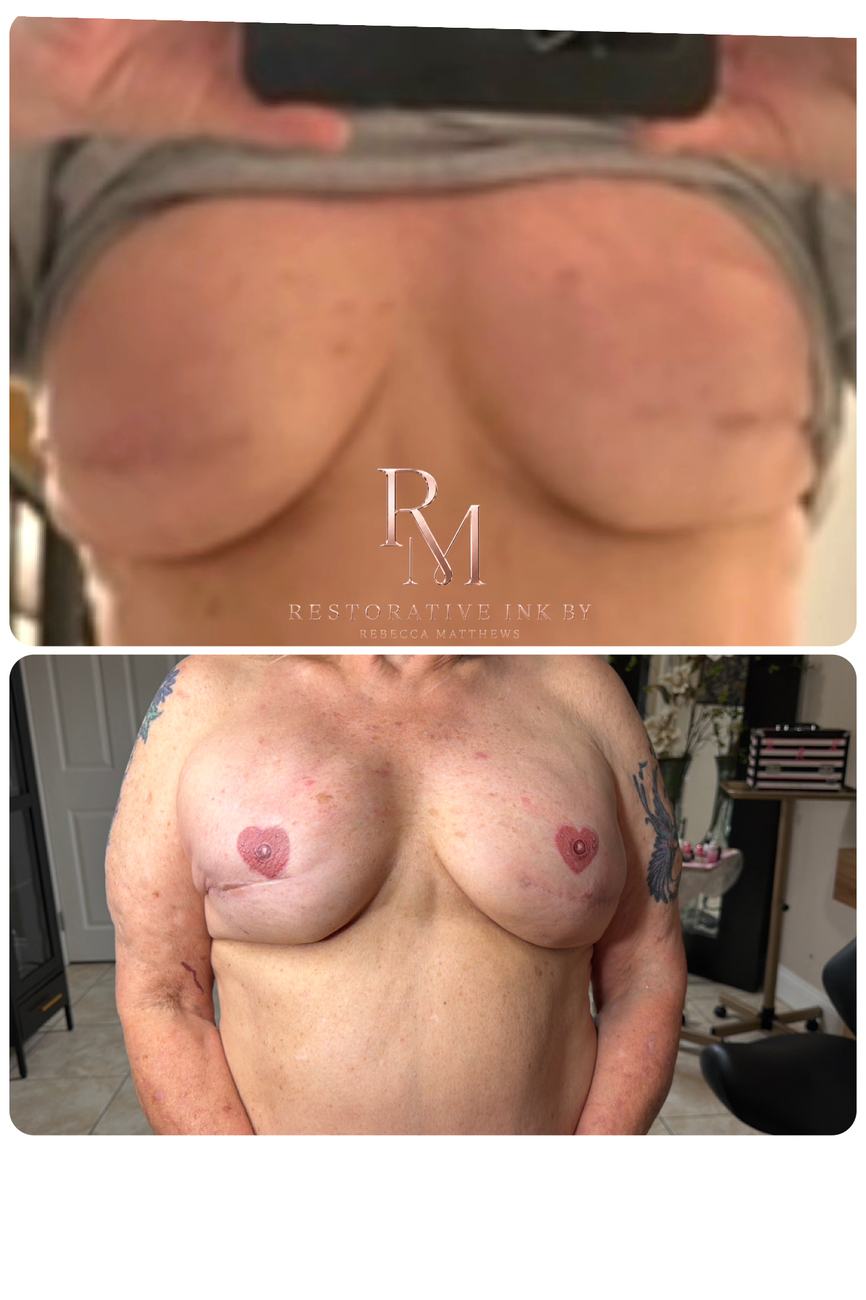
Heart-shaped areola restoration, bilateral, after mastectomy
Custom Heart Design — Bilateral

Unretouched results, shared with patient consent. Outcomes vary by scar type, age, and skin tone.

Before Anything Is Scheduled

Your virtual consultation is free

Every case is different. Scar age, size, texture, skin tone, and any prior treatment all change what a plan looks like — which is why pricing is never quoted sight unseen. Your virtual consultation costs nothing, and you leave it knowing whether you're a candidate, what the plan involves, and exactly what it costs before you commit to anything.

Book Your Free Virtual Consultation

Common Questions

3D Areola Restoration

Does areola restoration hurt?

Most reconstructed tissue has reduced sensation, and many patients feel little during the procedure. Where sensation is intact, topical numbing is used. Patients routinely describe it as easier than they expected.

How long before I can have this done after surgery?

Skin must be fully healed and cleared by your surgeon, which is generally a minimum of three months after your last procedure. Your consultation confirms whether you're ready.

Will it look like a real areola?

That is the entire goal. Dimensional shading creates the appearance of projection even on completely flat skin. The gallery shows unretouched healed results so you can judge for yourself.

Do you work on darker skin tones?

Yes, and it is a specialty. Fitzpatrick IV–VI skin requires different pigment selection and healing expectations than lighter skin, and it is where generic technique most often fails.

Is this covered by insurance?

Areola restoration is sometimes covered as part of post-mastectomy reconstruction. Coverage varies by plan, so check with your insurer. The Women's Health and Cancer Rights Act requires many plans to cover reconstruction after mastectomy.

Related Services

View all services →